Could hantavirus become the next Covid?
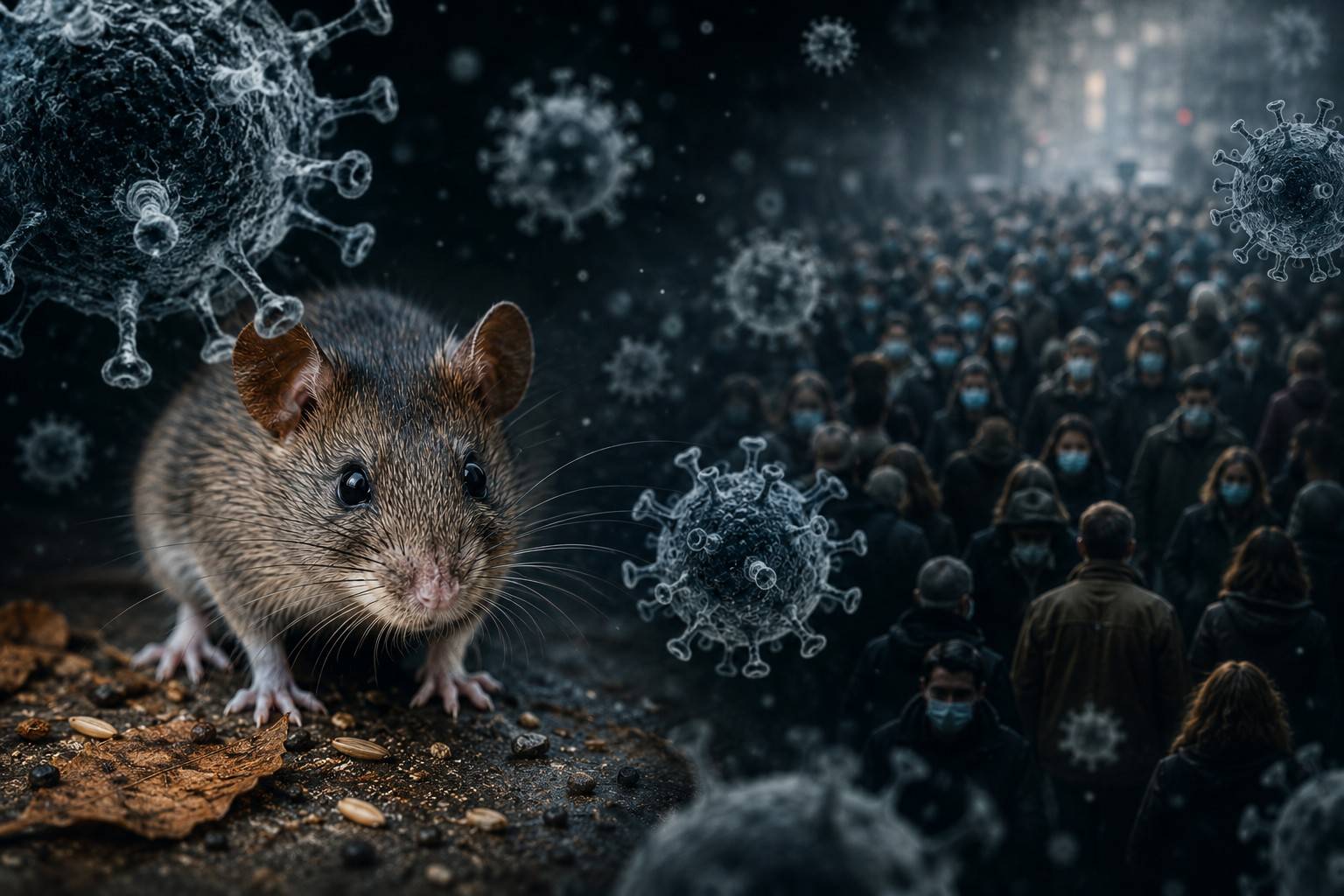
Since the global health crisis of 2020, the lens through which we analyze biological threats has changed radically. Whenever a virus presents a high case-fatality rate or worrisome transmission characteristics, a legitimate question emerges: could this pathogen cause the next global health collapse?
The hantavirus, with its frightening lung mortality statistics and its global presence in various strains, regularly finds itself at the heart of this questioning. Rumors of a “deadly new virus ready to escape” regularly resurface on networks and reinformation forums.
Having defined the biological nature of this virus in our first section, we now need to analyze its capacity to reach a major epidemic milestone.
Does the hantavirus have the biological potential to become the “next Covid”? Will we one day see mass confinements or disruption of global supply chains caused by this rodent-borne virus? To answer this question with the necessary scientific rigor, we need to unravel the contagion mechanisms of this virus and compare them with those of coronaviruses.
The basic pandemic equation: R0 and mode of transmission
The concept of basic reproduction rate (R0)
For a virus to become pandemic, i.e. to spread uncontrollably across several continents, it must have a basic reproduction rate (R0) consistently greater than 1 in the human population. The R0 represents the average number of people a single infected individual will infect during its infectious period.
For SARS-CoV-2 (the virus responsible for Covid), the initial R0 was between 2.5 and 3, before climbing to much higher levels with successive variants such as Omicron. This means that one sick person transmitted the virus to three others, creating a lightning-fast exponential growth curve. In the case of classical hantavirus, the R0 in the human population is technically close to zero. Why such a difference? It’s all down to the species barrier.
Human-to-human transmission: The hantavirus missing link
Covid is an evolutionary success from a viral point of view, as it is an upper respiratory virus that is transmitted directly from human to human via micro-droplets emitted by speaking, coughing or simply breathing. Transmission is direct and highly fluid.
Hantavirus is basically a strict zoonosis. This means that humans are what epidemiologists call an “epidemiological cul-de-sac”. The virus penetrates the human organism, replicates and causes severe damage, but in the vast majority of cases, it is unable to leave the human body to infect another human being. To contract the hantavirus, direct contact with the rodent-contaminated environment is required. A person dying of Hantavirus Pulmonary Syndrome in a hospital room will not contaminate the nursing staff or their families.
The Argentine exception: the worrying case of the Andes virus
The emergence of human-to-human transmission
In any survivalist risk analysis, we need to track down the exceptions, because it’s these that redefine the rules of the game. In the case of hantavirus, the exception has a name: the Andes virus. This particular strain, identified in South America (mainly Argentina and Chile), has shattered the medical dogma of the absence of human-to-human transmission.
In several local epidemics, including Epuyén in Argentina in 2018-2019, epidemiologists have formally documented direct human-to-human transmission chains. People contracted the virus after attending a victim’s funeral or sharing an enclosed space with a sick person, without ever having been in contact with wild rodents or their droppings.
The specific gravity of the Andes strain
What makes the Andes strain particularly formidable is that it combines this (admittedly limited) capacity for human-to-human transmission with the aggressive lethality of New World strains. The mortality rate during these local outbreaks remained extremely high, approaching 30% to 40%.
However, genetic and epidemiological studies have shown that this human-to-human transmission remains evolutionarily “inefficient”. The Andes virus requires close physical contact or prolonged exposure to bodily fluids to pass from one individual to another. The R0 of the Andes strain in humans generally stagnates below 1 (around 0.6 to 0.8), meaning that transmission chains naturally die out after a few generations of sufferers, preventing a global pandemic explosion.
Evolutionary mechanics: Can the hantavirus mutate?
The genetic reassortment phenomenon
To assess the likelihood of a virus becoming the next major health crisis, we need to look at how it mutates. The hantavirus genome is segmented into three distinct parts (S, M and L). This molecular configuration exposes the virus to a very specific evolutionary mechanism: genetic reassortment.
If the same rodent, or intermediate host, were to be infected simultaneously with two different strains of hantavirus, segments of the two viruses could mix during cell replication. This process can give rise to a completely new hybrid virus in the space of a few hours, unlike mutations by slow genetic drift. If a strain were to acquire the human-to-human contagiousness of a respiratory virus through reassortment, while retaining the lethality of the hantavirus, the disaster scenario would be in place.
Structural biological locks
Fortunately for the resilience of our species, nature imposes strict limits. For a virus to spread pandemically by air between humans (like influenza or Covid), it must be able to effectively colonize the upper respiratory tra ct (nose, throat, pharynx) without immediately destroying its host. This is what makes it possible to produce light sputters and aerosols during a simple chat.
The hantavirus has a very specific cellular tropism: it targets the endothelial cells of deep blood vessels and the lower lung tissues (alveoli). This deep anatomical localization makes it very difficult for a human patient to project the virus into the air. To change this mode of action, the virus would have to radically alter the structure of its surface glycoproteins (G1 and G2) to attach to new human receptors. Such a major mutation requires more than simple reassortment; it runs up against biological viability constraints that keep the virus trapped in its original model.
Anatomical comparison of a seizure: Hantavirus vs Covid
Propagation speed versus lethality
In epidemiology, there is often an evolutionary compromise between virulence (disease severity) and transmissibility. An extremely lethal virus that rapidly kills or immobilizes its host is less likely to spread widely, as the patient rapidly ceases to circulate in the community.
Covid has spread everywhere, as it causes the vast majority of mild or asymptomatic cases. Millions of people carrying the virus continued to fly, go to work and frequent public places, unknowingly spreading the pathogen. The hantavirus (at least for its severe strains) causes disabling illness in a matter of days, confining the patient to bed or to intensive care, which drastically limits its geographical capacity to spread the virus.
The crucial role of the animal reservoir
SARS-CoV-2 has adapted to humans to the point where it no longer needs its original animal reservoir to saturate the planet. The hantavirus, on the other hand, remains totally dependent on the population density of its rodent hosts. A human hantavirus epidemic does not spread from city to city via the flow of travellers, but scrupulously follows the areas of proliferation of voles or wild mice. It is a geographical, local and seasonal threat, disconnected from the dynamics of the globalization of human transport.
Realistic crisis scenarios
The local collapse of health infrastructures
Although the hantavirus cannot cause a global pandemic with worldwide containment, it retains a major capacity to cause harm that everyone needs to integrate into their contingency plans. The most likely scenario is not a global crisis, but a local saturation of emergency services during a year of rodent outbreaks.
In a specific rural area, a sudden increase in the vole population (linked to climatic or forestry factors) can multiply cases of Hemorrhagic Fever with Renal Syndrome. In normal situations, hospitals manage the situation. In a deteriorating systemic crisis, the influx of patients requiring intensive care or dialysis can cause the immediate collapse of the local healthcare system, transforming a manageable threat into a regional humanitarian crisis.
The impact of climate change and urbanization
Man’s alteration of ecosystems is causing wildlife to modify its behavior. The expansion of peri-urban areas increases contact between forest rodents and human dwellings. In addition, milder winters allow a greater number of rodents to survive, increasing the overall viral load present in the environment when spring arrives.
So the risk is not of a mutant virus from another continent, but of increased environmental viral pressure right around your own home. The threat is growing silently in our countryside, without making the headlines.
Why media panic is an analytical trap
The sensationalism of headlines
The general media regularly seize on an isolated case of death by hantavirus to generate clicks with alarmist headlines such as: “Scientists worried about new virus with 40% mortality rate”. Giving in to this panic is an error of critical analysis.
Good preparedness is based on a cold assessment of probabilities and impacts. The individual impact of hantavirus is enormous (life-threatening), but the probability of mass contagion is statistically insignificant with current strains. Reacting to the hantavirus threat by stockpiling tons of food for global pandemic containment is a poor allocation of your resources.
The distinction between global risk and individual protection
The conclusion that hantavirus will not be the next Covid should not lead you to lower your guard. That’s the paradox of this pathogen: the global pandemic risk is virtually nil, but the individual health risk is very real. The fact that the virus is not transmitted from human to human does not make it any less dangerous if you inhale dust from an infested shed.
Your preparedness strategy therefore needs to adapt: it’s not a question of preparing for a major societal disruption caused by this virus, but of having the technical skills and material equipment to protect yourself and those around you.
Key points for your risk matrix
The hantavirus does not currently possess the biological keys that enabled Covid to paralyze the planet. Its absolute dependence on its rodent reservoir, its structural inability to transmit easily by air between humans and its sheer virulence make it an unlikely candidate for a major global pandemic.
The Andes strain in South America remains under close medical surveillance due to its unique human-to-human transmission capabilities, but remains contained by natural epidemiological barriers. Hantavirus remains a local zoonosis, an environmental risk linked to the presence of small wild mammals.
This rational analysis puts the threat in its proper perspective: an individual, domestic and occupational biological risk, which doesn’t require the construction of a pandemic bunker, but the adoption of strict respiratory protection protocols. In the third and final part of our dossier, we turn to concrete action, answering the crucial material question: what equipment and what type of mask must you choose to definitively neutralize the hantavirus risk in the field?
