What is hantavirus?
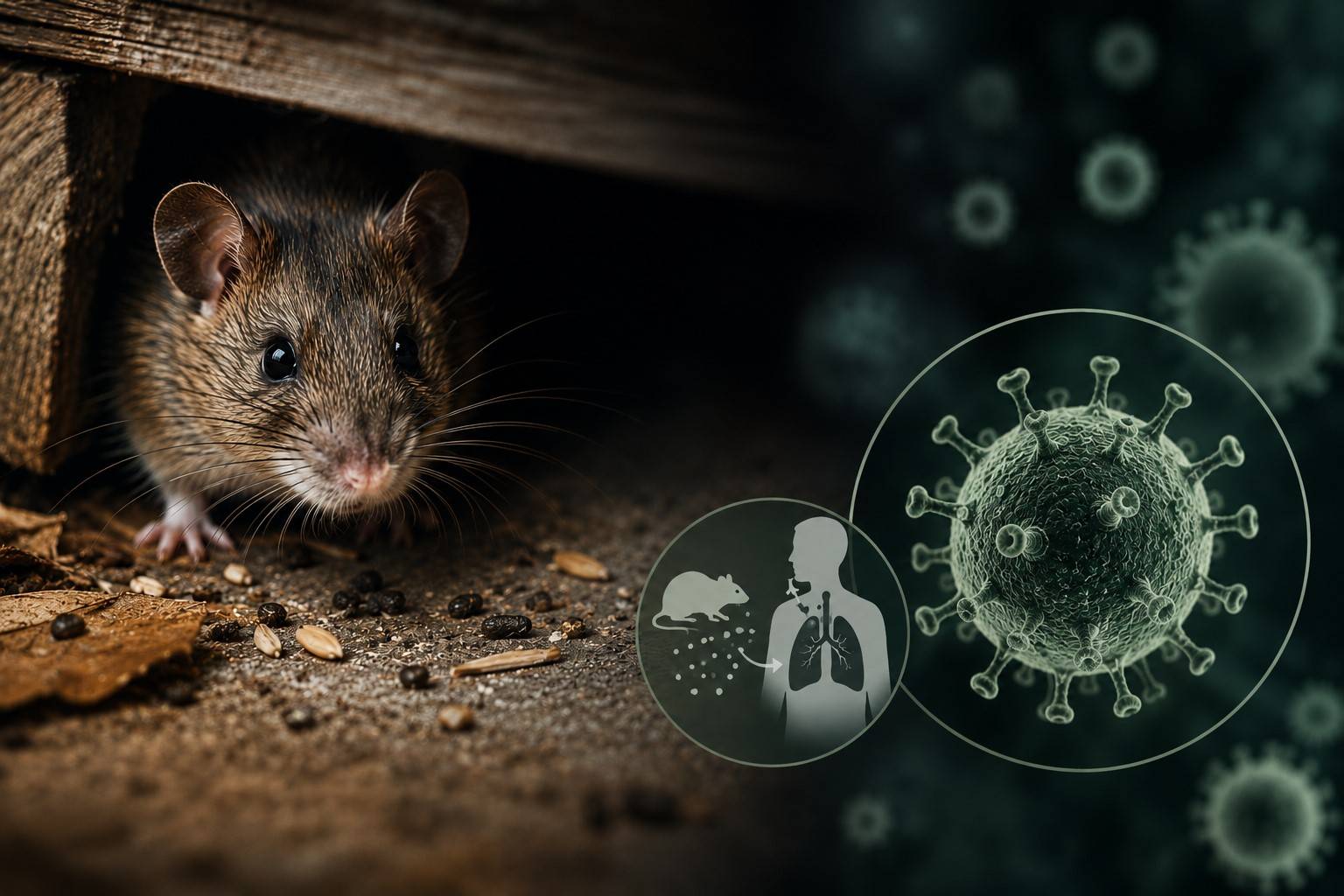
To begin our series of hantavirus biohazard guides, we need to lay the foundations. What exactly is the hantavirus? Where does it come from and how does it affect the body? This first article provides you with a complete mapping of the threat, to help you understand it before you learn how to manage it.
The origins of the hantavirus: A recent historical discovery
The Korean War as a starting point
Although diseases caused by this family of viruses have probably existed for centuries, the hantavirus was not formally identified until the middle of the 20th century. It was during the Korean War, in the early 1950s, that the virus first made its presence felt on a large scale. More than 3,000 United Nations soldiers fell seriously ill, suffering from mysterious fevers and acute kidney failure.
It wasn’t until 1976 that Korean virologist Ho-Wang Lee finally isolated the causative agent. The virus takes its name from the Hantan River in South Korea, close to the area where the soldiers had been infected. This discovery has paved the way for the identification of a vast family of similar viruses worldwide.
The 1993 crisis in North America
For a long time, the Western world thought that this threat was confined to Asia and Eastern Europe. But in 1993, all hell broke loose in the “Four Corners” region of the United States (the shared border of New Mexico, Arizona, Colorado and Utah). An athletic young man from the Navajo community died suddenly of respiratory distress.
Health authorities then discovered a new strain of hantavirus, dubbed virus Sin Nombre (the virus with no name). Unlike the Asian strain, which attacked the kidneys, this American variant directly targets the lungs, with a terrifying lethality rate. The hantavirus thus became a top priority for epidemiologists the world over.
The nature of the virus: A specific biological structure
An enveloped RNA virus
In purely biological terms, hantaviruses belong to the Hantaviridae family (formerly classified as Bunyaviridae). They are single-stranded RNA viruses. This means that their genetic material consists of a single strand of ribonucleic acid. This structure enables them to mutate relatively easily to adapt to their hosts, although their mutations are generally less anarchic than those of influenza.
A crucial feature for the survivalist is that hantavirus is an enveloped virus. Its outer membrane is made up of a double layer of lipids. Why is this important? Because enveloped viruses are physically more fragile in the external environment than naked viruses. This lipid envelope is their Achilles heel: it is easily destroyed by heat, the sun’s ultraviolet rays, and above all by basic disinfectants such as bleach or alcohol.
The natural reservoir concept
The hantavirus cannot survive indefinitely or multiply autonomously in the wild. It needs a host. In the present case, the natural reservoir is made up exclusively of small mammals, mainly wild rodents (mice, voles, rats) and occasionally certain species of shrew or bat.
The most fascinating and dangerous aspect of this relationship is the coevolution between the virus and its host. Rodents carrying the hantavirus develop no symptoms. It doesn’t get sick, its lifespan isn’t shortened, and its behavior remains totally normal. The virus establishes a chronic infection in the animal, which becomes a permanent replication factory, excreting the pathogen throughout its life.
The transmission mechanism: From animal to human
Excretion of viral particles
Infected rodents continuously eliminate hantavirus through their bodily fluids. The highest concentrations are found in urine, feces and saliva. When an animal moves into a storage area, it deposits these biological materials on the floor, tools, firewood or food packaging.
The main route: Inhalation of aerosols
Direct transmission by rodent bite exists, but remains extremely rare. In almost all cases, humans become infected via the respiratory route, through aerosols. When rodent urine or droppings dry out, they solidify and become part of the surrounding dust.
The slightest mechanical movement in the room (sweeping, shuffling boxes, handling logs, shaking an old comforter) sends this contaminated dust back into the air. The operator inhales thousands of micro-particles carrying the virus. These particles pass through the upper respiratory tract and lodge directly in the heart of the lungs, initiating the infection.
Other modes of contamination
Even if inhalation is the royal road of the virus, two other modes of transfer deserve your attention in field situations:
- Direct contact: You handle an object soiled with fresh urine, then rub your eyes or nose, or put your fingers to your mouth. The virus then passes through the mucous membranes.
- Skin inoculation: The virus enters the bloodstream through direct contact with an open wound, an unprotected scratch or a cut on your hands.
Geography of the threat: The different strains and their targets
The European strain: The Puumala virus
In Western Europe, and particularly in France (especially in the northeast quarter), the predominant strain is the Puumala virus. The reservoir of this virus is the bank vole, a very common small forest rodent.
Waves of human infections are often cyclical and directly correlated with the amount of food available to voles (as in years of high production of faines and acorns). The more numerous the rodents, the greater the environmental risk for humans working in or near forests.
Other Old World variants
In Eastern Europe and Asia, we find strains that are generally more aggressive. The Hantaan virus, carried by the striped field mouse, and the Dobrava virus are responsible for more severe pathologies. The urban environment is not spared: the Seoul virus is carried by the brown rat(Rattus norvegicus), present in the sewers and infrastructures of major cities worldwide.
The New World: American strains
Across the Atlantic, the biological situation is radically different. The Sin Nombre virus, carried by the deer mouse, is rife in North America. In South America, the Andes virus is the most feared. These strains are distinguished by their biological aggressiveness on human lung tissue, provoking medical crises of a rare violence compared to European strains.
Virus action on the organism: Human pathologies
Hemorrhagic fever with renal syndrome (HFRS)
This is the typical clinical form seen in Europe and Asia (caused by Puumala, Hantaan or Dobrava strains). The virus penetrates the endothelial cells lining the interior of blood vessels.
Infection causes widespread inflammation and increases capillary permeability. Blood vessels begin to “leak”. The kidneys, which are highly vascularized filtration organs, bear the brunt of the damage. The disease results in a sudden drop in kidney function, a fall in blood pressure and, in severe cases, internal bleeding.
Hantavirus Pulmonary Syndrome (HPS)
This form is mainly found on the American continent. Here, thetarget organ is no longer the kidney, but the lung. The mechanism of vascular leakage occurs in the pulmonary capillaries.
Blood plasma massively infiltrates the alveoli, causing acute pulmonary edema. In short, the victim’s lungs fill with his or her own body fluids. The person suffers sudden respiratory distress, similar to internal drowning, depriving the body of oxygen within a few hours.
Symptoms: How to recognize infection
The silent incubation phase
After inhalation of the virus, nothing happens immediately. The hantavirus takes its time to replicate inside endothelial cells. The incubation period is generally two to three weeks, but can vary from a few days to almost two months. This long incubation period makes diagnosis difficult, as the patient has often forgotten that he or she cleaned out a cellar or handled wood weeks before.
The prodromal phase: The false flu trap
The first symptoms are totally aspecific. The illness sets in suddenly and resembles a strong seasonal flu:
- Sudden high fever, often accompanied by chills.
- Intense myalgia (deep muscle pain), mainly in the back, thighs and shoulders.
- Severe headaches, frequently associated with painful sensitivity to light (photophobia).
- Minor gastrointestinal complaints such as nausea, vomiting or abdominal pain, which can be misleading for the doctor.
The state phase: Clinical bifurcation
After a few days of this “flu”, the situation changes depending on the strain contracted:
In the European renal form (Puumala), the patient experiences severe back pain (in the kidneys) and a drastic drop in urine volume (oliguria), sometimes accompanied by transient visual disturbances (acute myopia).
In the American pulmonary form, the patient suddenly starts coughing and gasping for air. Dyspnea (difficulty breathing) quickly sets in, forcing the patient to struggle for every breath, a sign that pulmonary edema is forming.
Prognosis and severity: The real figures
Lethality by geographical area
The severity of a hantavirus infection depends almost exclusively on the biological strain to which you have been exposed:
- Fortunately, the European strain (Puumala) is the least lethal. Its case-fatality rate is less than 1%. The vast majority of infected people recover spontaneously after a period of great fatigue and a few days in hospital to monitor their kidneys.
- Strains from Asia (Hantaan) or Eastern Europe (Dobrava) are more severe, with mortality ranging from 5% to 15%.
- American strains (Sin Nombre, Andes) are the most formidable. The mortality rate for Hantavirus Pulmonary Syndrome is between 35% and 40%, even with modern medical treatment.
No curative treatment
A critical aspect of downtime risk management is thetotal absence of any specific, validated antiviral treatment. There is no magic pill, no effective antibiotic (antibiotics target bacteria, so have no effect on hantavirus).
Modern medicine relies solely on supportive treatment. In the case of the renal form, hydration is monitored and dialysis (artificial kidney) may be used temporarily. In the case of the pulmonary form, the patient is immediately placed in an intensive care unit on heavy respiratory support (mechanical ventilation or extracorporeal membrane oxygenation – ECMO) to keep the body alive while the immune system fights the virus.
In the next part of our dossier, we tackle a burning question: does hantavirus have the biological characteristics needed to mutate and become the next global pandemic, like Covid? We’ll analyze its capacity for human-to-human transmission to assess the real risk of a global health collapse linked to this pathogen.
